The microwave oven has evolved from a simple reheating tool into an indispensable kitchen appliance, offering convenience and versatility for modern lifestyles. Whether you’re upgrading an old model or purchasing one for the first time, choosing the right microwave can significantly enhance your cooking experience. This guide will walk you through the essential factors to consider, helping you find the ideal microwave oven to fit your needs and kitchen.
Understanding Microwave Oven Types
Microwave ovens can be broadly categorized based on their functionality and how they are installed in your kitchen.
By Functionality
- Solo Microwave Ovens: These are the most basic and affordable models, perfect for simple tasks like reheating leftovers, defrosting frozen foods, and making popcorn. They operate solely using microwave energy.
- Grill Microwave Ovens: Building on solo models, grill microwaves include an additional heating element that allows you to grill, toast, and brown food. They are suitable for those who enjoy the occasional grilled item alongside their regular microwave functions.
- Convection Microwave Ovens: These are the most versatile type, combining microwave technology with a convection fan and heating element. This allows them to function as a traditional oven, capable of baking, roasting, and crisping, in addition to standard microwaving. They are ideal for smaller kitchens where space for multiple appliances is limited.
- Combination Microwaves: Some advanced models offer even more functionalities, sometimes including air frying or operating as part of a larger unit like a microwave-hood combination or a wall oven with an integrated microwave.
By Placement
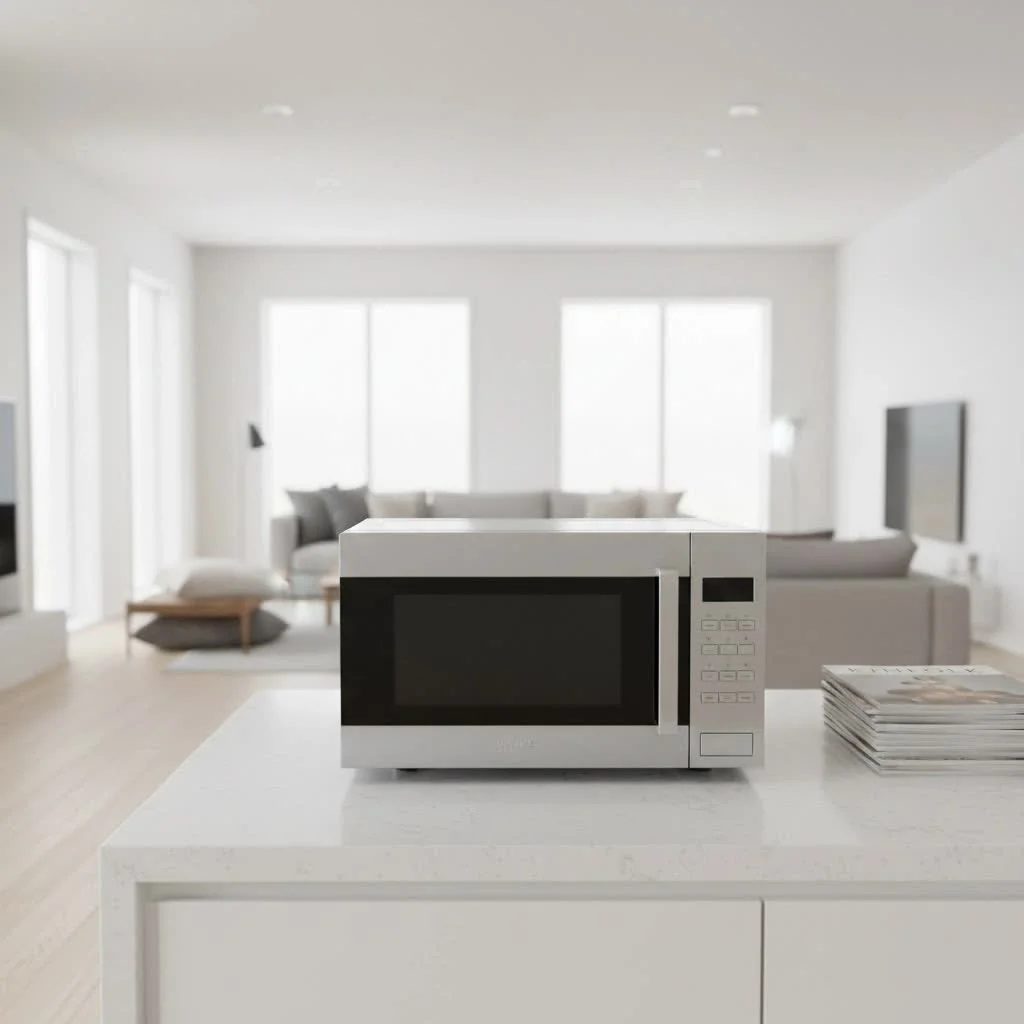
- Countertop Microwaves: These are freestanding units that sit on your kitchen counter. They are easy to install—just plug them in—and offer flexibility in placement. However, they do occupy valuable counter space.
- Over-the-Range (OTR) Microwaves: Designed to be installed above your cooktop, these models save counter space and often double as a range hood, providing ventilation and lighting for your cooking area. They require specific installation and venting. Low-profile OTR models are also available for kitchens with less vertical space.
- Built-in Microwaves: For a sleek, integrated kitchen aesthetic, built-in microwaves are installed directly into cabinetry or a wall. They often feature a door that opens downwards like a traditional oven and offer a custom, seamless look. These require precise measurements and professional installation.
- Under-counter/Drawer Microwaves: These units are built into lower cabinetry, often an island, and slide open like a drawer. They offer discreet placement and easy top-loading access, making them convenient for families and those with open-plan kitchen designs.
Key Factors to Consider Before Your Purchase
To select the best microwave oven, evaluate these important specifications and features:
Capacity and Size
|
Our Picks for the Best Microwave Oven in 2026
As an Amazon Associate I earn from qualifying purchases.
|
||
| Num | Product | Action |
|---|---|---|
| 1 | BLACK+DECKER EM720CB7 Digital Microwave Oven with Turntable Push-Button Door, Child Safety Lock, 700W, Stainless Steel, 0.7 Cu.ft |

|
| 2 | TOSHIBA ML-EM09PA(BS) Small Microwave Oven with 6 Auto Menus, Mute Function & Child Lock, LED Lighting, Perfect for Apartment, 0.9 Cu Ft, 10.6 Inch Removable Turntable, 900W, Black Stainless Steel |
|
| 3 | TOSHIBA EM131A5C-SS Countertop Microwave Ovens 1.2 Cu Ft with 12.4\" Removable Turntable Smart Humidity Sensor, 12 Auto Menus Mute Function ECO Mode Easy Clean Interior, 1000W, Silver |
|
| 4 | TOSHIBA ML-EM09PA(SS) Small Microwave Oven with 6 Auto Menus, Mute Function & Child Lock, LED Lighting, Perfect for Apartments & Dorms, 0.9 Cu Ft, 10.6 Inch Removable Turntable, 900W, Stainless Steel |
|
| 5 | GASLAND 30 Inch Over-the-Range Microwave Oven, 1.7 Cu.Ft Over Stove Microwave, 1000W with 10 Power Levels, Sensor & One-Touch Cooking, 300 CFM Venting, LED Cooktop Light, Black Kitchen Microwave |
|
| 6 | TOSHIBA EM131A5C-BS Countertop Microwave Ovens 1.2 Cu Ft, 12.4\" Removable Turntable Smart Humidity Sensor 12 Auto Menus Mute Function ECO Mode Easy Clean Interior Black Color 1000W |
|
| 7 | FRIGIDAIRE EMW733BLACKAMZ 0.7 Cu. Ft. Microwave, Black |
|
| 8 | Chefman Countertop Microwave Oven 0.7 Cu. Ft., 700 Watts with 10 Power Levels, 6 Cooking Presets with One-Touch Express Cook, Eco Mode, Child Safety Lock, & Mute Button - Black |
|
| 9 | COMFEE\' EM720CPL-PMB Countertop Microwave Oven with Sound On/Off, ECO Mode and Easy One-Touch Buttons, 0.7cu.ft, 700W, Black |
|
| 10 | Midea Flexify Pro 10+4 Toaster Oven Air Fryer Combo, Graphene Juicy-Lock Cooking, French Door Countertop Oven, 450°F Flash Air Fry, 26.4 QT Stainless Steel |
|
Consider both the external dimensions (to fit your available kitchen space) and the internal capacity (to accommodate your dishes).
- External Dimensions: Measure the width, height, and depth of the space where you plan to place the microwave, especially for built-in or over-the-range models. Remember to allow adequate ventilation space around countertop microwaves (typically 10 cm on the sides and 20 cm at the top).
- Internal Capacity: This is measured in cubic feet or liters.
- Compact (under 1.0 cu. ft. / 20 liters): Best for individuals or light use (reheating single portions, popcorn).
- Mid-size (1.0–1.6 cu. ft. / 21-30 liters): Suitable for small to medium families, accommodating most dinner plates.
- Large (1.6 cu. ft. and above / 31+ liters): Ideal for larger families, entertaining, or cooking in bigger casserole dishes.
Wattage
Microwave power is measured in watts; higher wattage generally means faster and more even cooking.
- Most microwaves range from 600 to 1,500 watts.
- For optimal performance and consistent results, many recipes assume a 1,000-watt microwave.
- Aim for at least 700 watts for basic tasks, and 1,000 watts or more for heavy-duty cooking, larger items, or quicker results.
Essential Features
Modern microwaves come with a variety of features that enhance convenience and cooking performance.
- Auto Cook Programs: Pre-programmed settings for popular foods like popcorn, pizza, or potatoes, simplifying cooking by automatically adjusting time and power.
- Defrosting Function: Look for precise defrost settings, ideally by weight or time, to thaw food evenly without cooking it.
- Sensor Cooking: This intelligent feature detects humidity levels inside the oven and automatically adjusts cooking time and power to prevent over- or under-cooking.
- Inverter Technology: Provides a continuous, consistent power level for more even cooking and defrosting, preserving food texture and flavor better than traditional on-off cycling.
- Child Safety Lock: Essential for households with young children, preventing accidental operation.
- Control Panel: Consider ease of use. Some prefer mechanical knobs for simplicity, while others opt for sleek touch panels with digital displays.
- Quick-Start Buttons: Allow for one-touch cooking at full power for common intervals (e.g., 30 seconds, 1 minute).
- Mute Function and Eco Mode: Some models offer the ability to silence beeps and an energy-saving mode to reduce standby power consumption.
- Easy-to-Clean Interior: Non-stick or easy-wipe interiors simplify maintenance. Stainless steel can look stylish but may require more effort to keep smudge-free.
Budget
Microwave ovens are available across a wide price range. Solo countertop models are generally the most affordable, while convection, built-in, or feature-rich combination units will be at the higher end. Determine your budget upfront, but prioritize essential features over unnecessary extras.
Noise Level
While often overlooked, the operating noise of a microwave can be a factor, especially in open-concept living spaces. Some models are designed for quieter operation.
Design and Style
Consider how the microwave will fit into your kitchen’s overall aesthetic. Options range from classic white and black to modern stainless steel finishes.
Making Your Final Decision
By carefully evaluating these factors—the type of microwave best suited for your cooking habits and kitchen layout, the appropriate capacity and wattage, and the features that matter most to you—you can confidently choose a microwave oven that serves your needs effectively for years to come. Invest time in research to ensure your new appliance brings maximum convenience and culinary enjoyment to your home.
Cooking gear we tested in our own kitchens
Free PDF — preheat times measured on 10 popular air fryers.